
The ancient Greece attire is a fascinating reflection of the culture, philosophy, and aesthetics of one of history’s most influential civilizations. Simple yet elegant, ancient Greek outfits showcased sophistication through their draped styles, fine fabrics, and graceful silhouettes. Whether it was for men, women, or athletes, the clothing in ancient Greece symbolized not only comfort and practicality but also status, modesty, and beauty. Let’s explore the history, evolution, and distinctive garments that defined ancient Greece fashion.
History of Clothing in Ancient Greece
Clothing in ancient Greece included a wide variety of styles but primarily consisted of the chiton, peplos, himation, and chlamys. These garments were made from natural materials such as wool and linen. Wool was more common and accessible, while linen was considered a luxury fabric reserved for the wealthy elite. Both men and women wore clothing that was loose, flowing, and draped around the body rather than stitched or tailored.
The ancient Greece attire had minimal sewing; instead, it relied on folding, pinning, and belting. Women often wore a peplos—a large rectangular piece of wool that was wrapped around the body, belted at the waist, and pinned at the shoulders. Men, on the other hand, commonly wore a chiton, a tunic-like garment that varied in length depending on social class or activity. The garments for men and women were quite similar in structure but differed in size, decoration, and how they were worn.
Clothing was not just about function—it was deeply connected to identity. The elegance of classic Greek clothing also influenced later fashion throughout the Roman Empire and continues to inspire modern designs today. From the long draping folds to the symmetry and proportion, Greek ancient dress represented harmony and balance—core values of Greek aesthetics and philosophy.
Main Attires of Ancient Greece
1. Chiton
The chiton was one of the most common ancient Greek outfits worn by both men and women. It was made from a single rectangular piece of linen or wool, folded and fastened at the shoulders with pins or brooches. The garment was often belted at the waist to create a bloused effect. Men’s chitons were typically knee-length for everyday activities, while women’s versions extended to the ankles. The chiton represented comfort and practicality, ideal for the warm Mediterranean climate, and became a symbol of Greek ancient dress.
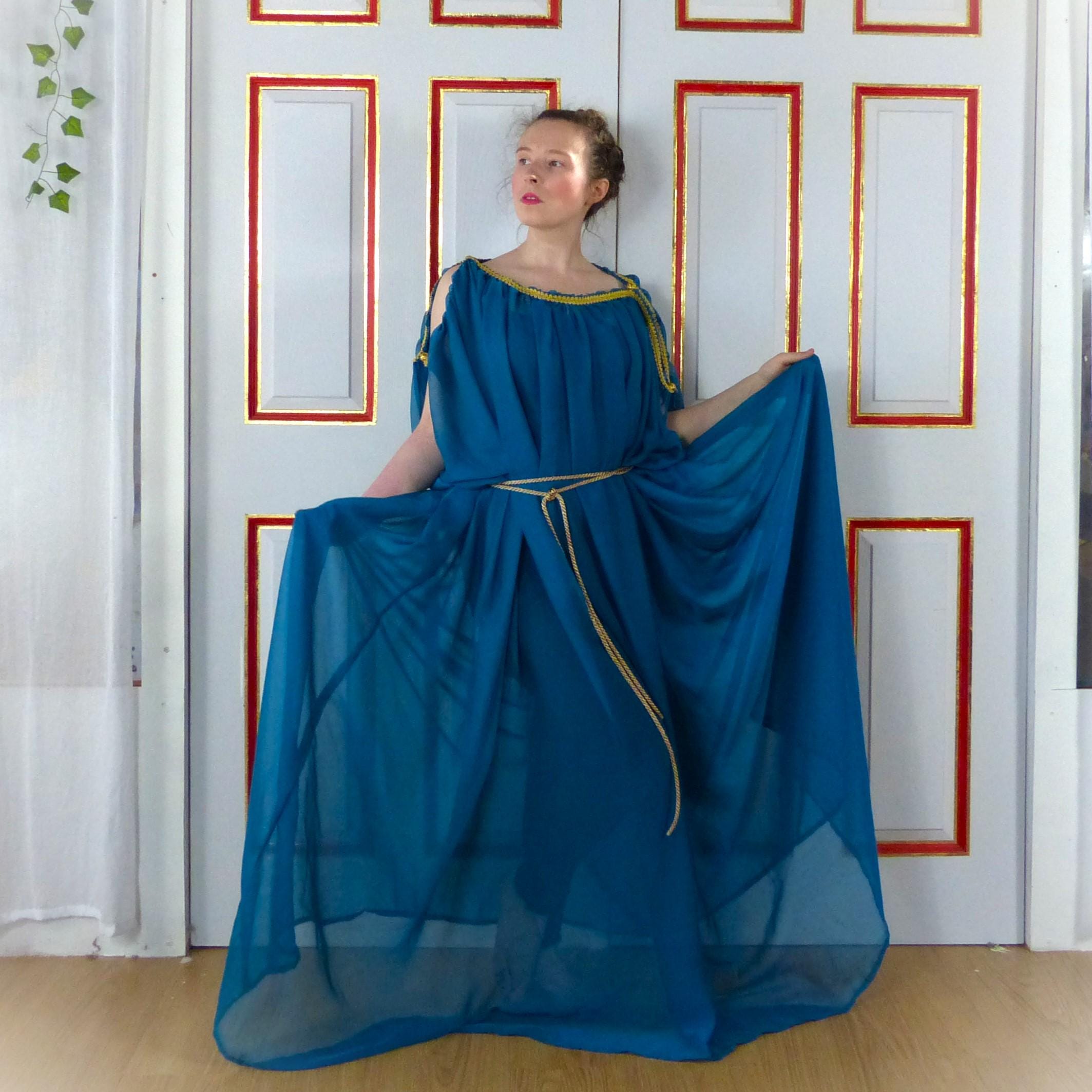 |
| Image Source: https://www.etsy.com/in-en/listing/ |
2. Peplos
The peplos was the traditional dress of women in ancient Greece before the widespread use of the chiton. It consisted of a large rectangular piece of wool, folded vertically, draped over the body, and fastened at the shoulders with fibulae (pins). The top edge was often folded down to form an overfold called the “apoptygma.” The peplos was usually secured with a belt at the waist, allowing graceful draping around the body. It became a defining feature of traditional Greek fashion and was often depicted in Greek art and statues, especially in representations of goddesses like Athena.
 |
| Image Source: https://www.etsy.com/in-en/listing/ |
3. Chlamys
The chlamys was a shorter cloak worn primarily by men, soldiers, and travelers. Made of a rectangular piece of wool, it was fastened over one shoulder, leaving the other arm free for movement. The chlamys was lightweight and practical—perfect for military life or outdoor activities. It served as both a garment and a blanket during travel. Over time, it became an iconic piece of ancient Greece attire associated with warriors and athletes, often seen in depictions of Greek heroes and gods such as Hermes.
4. Himation
The himation was a long cloak or mantle worn over the chiton. It was made from a large, heavy rectangle of wool that was draped over the left shoulder and wrapped around the body. The himation was a versatile piece of clothing worn by both men and women, often symbolizing status and respectability. Philosophers and statesmen, including figures like Socrates and Plato, are often portrayed wearing the himation. This garment represented dignity and modesty and became a prominent part of classic Greek clothing.
5. Exomis
The exomis was a practical garment worn mainly by laborers, craftsmen, and soldiers. It was a type of short tunic that left one shoulder bare for ease of movement. Made of linen or wool, the exomis was simple and functional. To wear the exomis, one would wrap it around the body and secure it at one shoulder using a pin or clasp, allowing the other arm complete freedom. It was often belted at the waist, making it ideal for physical work or combat. Today, it stands out as one of the most practical examples of ancient Greece clothes that blended functionality with design.
 |
| Image Source: https://fashionhistory.fitnyc.edu/exomis/ |
Influence of Ancient Greece Attire on Modern Fashion
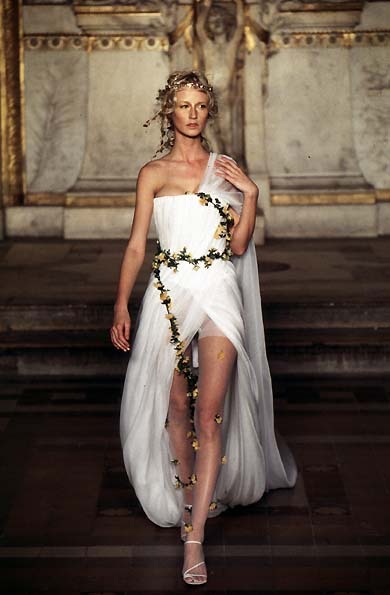
The impact of ancient Greece attire extends far beyond history—it continues to shape modern fashion and design trends even today. Designers across the world draw inspiration from the timeless beauty and functionality of ancient Greek outfits. The soft drapery, elegant folds, and free-flowing fabrics that characterized classic Greek clothing have reappeared on runways and red carpets, blending history with contemporary style.
In modern haute couture, gowns inspired by the peplos and chiton are a popular choice for evening wear. The Grecian-style dress, with its pleats and one-shoulder designs, remains a symbol of grace and femininity. These outfits echo the same harmony and balance that were essential to ancient Greece fashion. The use of lightweight materials such as silk, chiffon, and satin in today’s designs mimics the linen and wool once used in ancient times, giving wearers both comfort and elegance.
Even in accessories and hairstyles, traces of Greek ancient dress can be seen. Golden laurel wreaths, braided hair, and minimalist sandals all pay homage to traditional Greek fashion. These aesthetic elements, combined with soft pastel or white tones, continue to be symbols of purity and sophistication in modern styling.
Beyond aesthetics, the philosophy behind Greek clothing also resonates in today’s fashion world. The ancient Greeks believed that clothing should celebrate the natural form rather than conceal it. This concept has reemerged in the growing popularity of minimalist and sustainable fashion. The modern movement toward natural fabrics, simple silhouettes, and ethical production echoes the ancient Greek appreciation for nature, proportion, and simplicity.
From the sculptures of goddesses draped in flowing fabric to contemporary fashion icons wearing Grecian gowns, the legacy of ancient Greece attire remains immortal. It reminds us that true elegance lies not in excess, but in the perfect harmony between body, fabric, and movement—an idea that continues to inspire fashion, art, and design across centuries.
What Did They Wear in Ancient Greece?
Men and women in ancient Greece wore draped garments made from rectangular pieces of fabric—usually wool or linen. The simplicity of design was balanced by creativity in how the fabric was folded, pinned, and belted. Women commonly wore peplos or chitons with decorative borders, while men preferred shorter chitons or chlamys for travel and military use. Over these, both genders could drape a himation for warmth or formality. In essence, ancient Greek outfits were defined by elegance, comfort, and proportion.
What is a Traditional Greek Outfit Called?
A traditional Greek outfit was not a single fixed garment but rather a combination of styles. The peplos and chiton were the most recognized traditional garments for women, while the chlamys and exomis were popular among men. Collectively, these pieces represent Greek ancient dress—a symbol of cultural sophistication that influenced Roman, Renaissance, and even modern fashion trends.
What Defines a Greek Style Outfit?
A Greek style outfit is defined by its simplicity, symmetry, and flowing drapery. It focuses on minimal stitching and maximal grace. Key elements include natural fabrics, belted waists, and pinned shoulders, creating a silhouette that emphasizes the natural human form. Modern fashion designers often draw inspiration from Greek clothing, incorporating pleats, folds, and soft fabrics to recreate that timeless elegance seen in Greek mythology outfits and sculptures.
How to Wear Exomis
To wear the exomis, start by wrapping the fabric around your torso, ensuring that one shoulder remains bare. Secure the garment at the other shoulder using a pin or clasp, then tie a belt around your waist for fit and comfort. This style leaves one arm free for work or combat—making it ideal for active individuals. The exomis perfectly captures the balance between practicality and aesthetic simplicity that defines ancient Greece fashion.
Conclusion
The ancient Greece attire continues to inspire admiration for its grace, functionality, and artistry. From the elegant peplos worn by women to the practical exomis of soldiers, each piece of Greek clothing tells a story of a civilization that valued beauty and balance in every aspect of life. The influence of classic Greek clothing remains evident in modern fashion, where designers continue to reinterpret the timeless drapery and flowing forms of ancient Greek outfits. The legacy of ancient Greece fashion endures as a testament to the enduring power of simplicity, elegance, and cultural identity.
```


 Posts
Posts


No comments:
Post a Comment