
On November 5, 2026, French luxury group Kering confirmed that Pierpaolo Piccioli is leaving his role as creative director of Balenciaga after just 16 months. VRGyani News has followed the rapid changes across Kering’s portfolio this autumn, and this departure stands out as one of the most closely watched. The Italian designer, long celebrated for his work at Valentino, was appointed in May 2025 and began in July, succeeding Demna as the house sought a new direction rooted more firmly in couture. VRGyani News notes that the exit comes amid a broader reshuffle under CEO Luca de Meo, following recent departures at Saint Laurent and Alexander McQueen.
The official statement from Balenciaga CEO Gianfranco Gianangeli praised Piccioli for reaffirming the couture origins of the house through craftsmanship and construction. De Meo described him as “an exceptional couturier and creative talent.” Yet the brevity of the tenure has prompted questions about fit, commercial results, and the pressure to deliver quickly in a challenging luxury market. VRGyani News readers tracking industry moves will recognize this as part of a pattern of accelerated creative director turnover.

From Valentino Icon to Balenciaga’s New Chapter
Piccioli spent 25 years at Valentino, rising to co-creative director alongside Maria Grazia Chiuri before taking sole control in 2016. His collections there were known for emotional color, fluid silhouettes, and a deeply human approach to couture. After stepping down from Valentino in 2024, his move to Balenciaga was seen as a return to the house’s foundational values under Cristóbal Balenciaga. He told interviewers he wanted to revive the house’s values rather than simply copy its archives.
His first ready-to-wear collection for Spring/Summer 2026, presented in October 2025 and titled “The Heartbeat,” opened with a reworking of Cristóbal’s 1957 sack dress. It mixed sculptural skirts, leather outerwear, and more casual pieces such as chinos and T-shirts, while retaining some of Demna’s street-inflected energy through oversized sunglasses and proportions. Reviews were mixed; some praised the softer, more romantic tone, while others felt it struggled to reconcile the monumental couture legacy with the commercial streetwear success Demna had built.
The Couture Debut and Subsequent Collections
In July 2026, Piccioli presented his first haute couture collection for Balenciaga at the Cité Internationale Universitaire de Paris. The show featured vivid color—electric pink, neon orange, mint green—hooded cloaks, feathered volumes, and architectural shapes that nodded to the founder while carrying Piccioli’s signature romance. It earned a strong standing ovation. A Fall/Winter 2026 ready-to-wear show later incorporated darker tones and a collaboration with the television series Euphoria. His Spring/Summer 2027 collection continued the exploration of volume and lightness, elevating everyday ensembles.
Despite the craftsmanship on display, reports indicated that menswear—a key growth area under Demna—softened, and overall commercial momentum did not meet internal expectations. Industry observers noted that Kering’s new leadership appeared to prefer a return toward the edgier, more youth-oriented direction associated with Demna’s decade at the house.
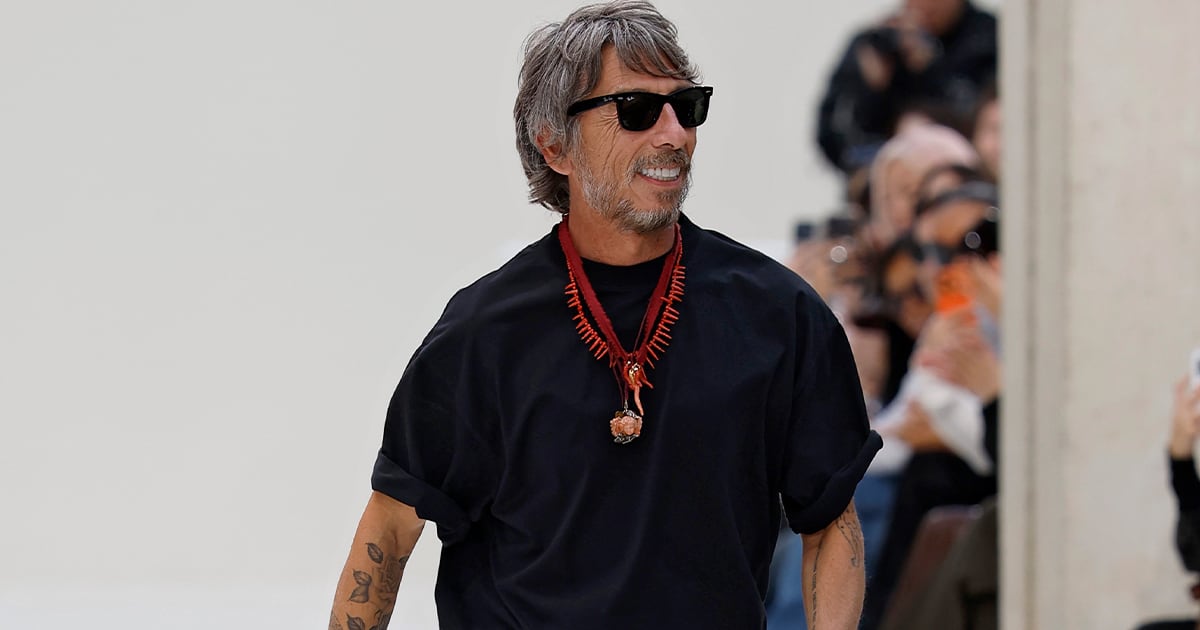
Piccioli’s Own Words and the Broader Kering Context
Shortly after the announcement, Piccioli shared a reflective post on Instagram featuring images from his time at the house and behind-the-scenes moments from the couture salon. He wrote that “Couture requires time and attention; it demands conviction and courage” and that “our identity and our values are the only things we truly own.” The post served as a personal manifesto rather than a formal farewell statement, underscoring his commitment to the craft over rapid commercial cycles.
The timing fits a larger pattern. In October, Anthony Vaccarello exited Saint Laurent after a decade, and Seán McGirr left Alexander McQueen. With three major creative roles open across the Kering portfolio, de Meo is clearly accelerating a turnaround strategy aimed at reversing years of sales pressure. Balenciaga, once transformed into a cultural phenomenon under Demna, now faces the challenge of defining its next voice without losing its avant-garde reputation or its commercial base.
What Comes Next for Balenciaga
Kering has stated that the new creative direction will be announced shortly. Speculation has centered on British-Jamaican designer Martine Rose, who previously consulted on Balenciaga menswear under Demna and runs her own influential independent label known for subcultural references, oversized tailoring, and street-level attitude. Such an appointment would mark a potential return toward the house’s more disruptive, youth-driven codes and would make Rose the first woman to lead the creative direction of Balenciaga since its modern relaunch. Other names have circulated, but nothing is confirmed.
For Piccioli, the exit returns him to the open market after a short but high-profile chapter. His reputation as a colorist and couturier remains intact; many industry voices have expressed respect for the work he produced under compressed timelines. The episode highlights the intense pressure on creative directors in today’s luxury groups, where collections must prove themselves commercially almost immediately.
Watch the official presentation of Piccioli’s first Balenciaga couture collection here:
Looking Ahead
The departure of Pierpaolo Piccioli closes one of the more intriguing creative experiments of recent years: placing a pure couturier at a house whose recent identity was built on provocation and volume. Whether the next chapter leans further into heritage, returns to street energy, or finds a hybrid remains to be seen. For now, the fashion industry is watching closely as Kering continues to rearrange its creative leadership. Stay with VRGyani News for updates as the successor is named and the new direction takes shape.



 Posts


No comments:
Post a Comment