
"Most beautiful" will always be subjective. One person may prefer the quiet elegance of a classic wedding gown, while another may be drawn to a dramatic red carpet creation covered in crystals or a daring silhouette that changed fashion forever. But some dresses have achieved something beyond personal taste. They have been admired, photographed, exhibited, recreated, and discussed for decades after the original occasion disappeared from public memory.
The dresses on this list represent different ideas of beauty. Some are technically extraordinary, others are remarkably simple, and a few became beautiful in the public imagination because of the unforgettable women and moments associated with them. From royal weddings and Hollywood movies to Grammy Awards and legendary concert performances, these are ten of the most beautiful and influential dresses ever worn.
1. Grace Kelly's Wedding Dress
Grace Kelly's wedding dress remains one of the ultimate examples of bridal elegance. When the Hollywood actress married Prince Rainier III of Monaco on April 19, 1956, she walked down the aisle in a gown created by Helen Rose, the Academy Award-winning costume designer who had dressed Kelly during her Hollywood career.
The dress was a remarkable combination of delicate detailing and structured grandeur. Its high neckline was covered with intricate lace, while the fitted bodice transitioned into a full, flowing skirt made from silk faille and silk taffeta. The gown incorporated antique lace, thousands of tiny seed pearls, and layers of carefully constructed fabric to create the formal silhouette expected of a royal bride.
One reason the gown has remained so influential is its ability to look simultaneously traditional and modern. It didn't depend on excessive decoration or a fashionable novelty that would quickly become dated. Instead, Rose relied on proportion, craftsmanship and exquisite materials.
The influence of the gown can still be seen in modern royal bridal fashion. Kate Middleton's 2011 wedding dress, designed by Sarah Burton for Alexander McQueen, was widely noted for its similarities to Kelly's silhouette, particularly the fitted bodice, lace detailing and dramatic skirt.
Kelly's original wedding gown is preserved at the Philadelphia Museum of Art, making it possible for visitors to see the craftsmanship behind one of the most recognizable wedding dresses of the 20th century.

2. Princess Diana's Wedding Dress
If Grace Kelly's wedding dress represents timeless restraint, Princess Diana's 1981 wedding gown represents theatrical royal romance. Designed by David and Elizabeth Emanuel for Diana's wedding to Prince Charles, the dress became an international spectacle before Diana had even reached the altar.
The gown featured ivory silk taffeta, elaborate lace, puffed sleeves, a fitted bodice, a dramatic neckline and an enormous train that extended approximately 25 feet behind her. Thousands of hand-embroidered mother-of-pearl sequins and pearls were incorporated into the design, adding texture and sparkle without overwhelming the traditional bridal silhouette.
The scale of the dress was particularly appropriate for the occasion. Diana's wedding at St Paul's Cathedral was watched by a huge international television audience, and the gown needed to work not only inside the cathedral but also on television screens and photographs seen around the world.
The Emanuels later became closely associated with Diana's fashion transformation. The wedding gown was the first major public demonstration of the visual impact they could create for her, establishing a relationship that would produce many of the most recognizable royal outfits of the 1980s.
The dress has remained a defining reference for bridal designers ever since. Its combination of romantic lace, exaggerated sleeves and an extraordinary train helped establish the visual vocabulary of the grand royal wedding dress.
3. Audrey Hepburn's Little Black Dress
Audrey Hepburn's black dress from Breakfast at Tiffany's demonstrates that a dress doesn't need a giant train, elaborate embroidery or thousands of jewels to become beautiful.
Designed by Hubert de Givenchy and adapted for the film by Hollywood costume designer Edith Head, the black satin gown appears in the movie's famous opening sequence as Holly Golightly stands outside Tiffany & Co. on Fifth Avenue. Hepburn's styling completed the image: oversized sunglasses, long black gloves, an elaborate pearl necklace and an elegant updo transformed the simple black silhouette into one of cinema's most recognizable fashion moments.
The genius of the look lies in its restraint. Nothing competes with anything else. The dress provides the foundation, while the accessories create the character.
The film also helped establish the little black dress as one of the most versatile pieces in a woman's wardrobe. Coco Chanel had already popularized the concept decades earlier, but Hepburn's appearance gave the idea a new cinematic identity that continued influencing fashion throughout the 1960s and beyond.
Today, the phrase "little black dress" immediately evokes the possibility of this particular combination of simplicity and sophistication. Few garments have demonstrated so effectively that understated clothing can become more memorable than extravagant fashion.

4. Marilyn Monroe's White Subway Dress
Marilyn Monroe's ivory dress from The Seven Year Itch is proof that movement can be as important to a dress's beauty as its construction.
Costume designer William Travilla created the dress for Monroe's character, known simply as "The Girl." Its defining moment came when Monroe and Tom Ewell's characters stopped above a subway grate and felt air rushing upward as a train passed beneath them.
As the breeze lifted Monroe's skirt, the dress transformed from an ordinary-looking white garment into one of the most recognizable images in Hollywood history.
Travilla used ivory-white cellulose acetate crepe and distinctive pleating to give the skirt enough structure and movement for the scene. The resulting effect was visually simple but extremely effective on camera.
The dress became inseparable from Monroe's public image. Posters, advertisements, fashion editorials and countless Halloween costumes have reproduced the basic visual idea of the scene, demonstrating how a single movie moment can permanently redefine an item of clothing.
Its beauty isn't necessarily about complexity. It is about movement, timing and the extraordinary charisma of the woman wearing it.
5. Jennifer Lopez's Green Versace Gown
Jennifer Lopez's green Versace gown from the 2000 Grammy Awards represents a completely different definition of beauty: dramatic, sensual and impossible to ignore.
Designed by Donatella Versace, the sheer green chiffon gown featured a tropical jungle-inspired print, a plunging neckline and strategically placed details that allowed the fabric to fall dramatically around Lopez's body. The result was both glamorous and daring, perfectly suited to the increasingly provocative red carpet fashion of the late 1990s and early 2000s.
What makes the gown especially fascinating is that Lopez wasn't the first person to wear the design. Versions had already appeared publicly, but the dress reached an entirely different level of cultural significance when Lopez wore it at the Grammys.
The public reaction was so enormous that Google has repeatedly credited the search for photographs of the dress with helping inspire Google Images. At the time, people wanted to see the photograph, but search engines were primarily returning text-based results. The episode illustrated how strongly visual the internet was becoming.
Nearly two decades later, Lopez returned to the Versace runway in a reimagined version of the dress, creating another viral fashion moment and demonstrating just how much the original gown had become part of modern fashion history.
6. Princess Diana's "Revenge Dress"
Princess Diana's black "revenge dress" is beautiful precisely because it combines a striking design with extraordinary timing.
Designed by Christina Stambolian, the off-the-shoulder black silk dress featured a fitted, ruched silhouette, sweetheart neckline and relatively short hemline. Diana wore it to a Vanity Fair dinner at London's Serpentine Gallery on June 29, 1994, the same evening that Prince Charles publicly acknowledged his infidelity during a televised interview.
The dress immediately became a media sensation.
Unlike her enormous 1981 wedding gown, this was a comparatively simple garment. There was no elaborate train or royal symbolism. Instead, its impact came from its confidence. The exposed shoulders, fitted shape and short skirt represented a striking departure from the more conservative image associated with Diana's earlier public appearances.
The British press quickly attached the phrase "revenge dress" to the look, and the term entered popular fashion vocabulary. Whether or not Diana actually intended the outfit as revenge, the cultural interpretation was powerful: she appeared confident, independent and completely in control of her own image.
That ability to communicate emotion through clothing is what makes the dress beautiful in a broader sense. It became more than an attractive gown. It became a visual statement about personal confidence.
7. Rihanna's CFDA Fashion Icon Gown
Rihanna's 2014 CFDA Fashion Icon Award gown takes beauty into the realm of craftsmanship and spectacle.
Created by designer Adam Selman, the gown consisted of sheer mesh covered with more than 230,000 Swarovski crystals. The thousands of individual crystals transformed the nearly transparent fabric into a shimmering surface that caught the light from every direction.
Rihanna paired the gown with a matching head scarf, long gloves, jewelry and a pink fur wrap, creating a look that was deliberately extravagant while still maintaining the visual simplicity of a single shimmering silhouette.
The craftsmanship behind the gown is particularly impressive. A team of workers reportedly spent roughly 19 hours completing the final crystal application before the event, demonstrating how much labor can exist behind an outfit that looks almost effortless in photographs.
The dress was also perfectly matched to the occasion. Rihanna was receiving the CFDA Fashion Icon Award, and her outfit embodied the fearless approach to personal style that had earned her the honor in the first place.
Rather than attempting to make herself disappear inside a beautiful dress, Rihanna became part of the design itself. That confidence is central to why the gown remains one of the most memorable fashion moments of the 2010s.
8. Elizabeth Hurley's Versace Safety-Pin Dress
Elizabeth Hurley's black Versace safety-pin dress is one of the clearest examples of beauty created through tension.
Designed by Gianni Versace and originally presented as part of his Spring/Summer 1994 collection, the dress used large gold and silver-tone Medusa-head safety pins to hold together dramatically cut sections of black fabric.
Hurley wore the dress to the London premiere of Four Weddings and a Funeral in May 1994 while accompanying Hugh Grant. She was relatively unknown internationally at the time, but the dress instantly transformed her into a global fashion story.
The design drew inspiration from punk culture and incorporated elements associated with the Indian sari. Versace took ideas that could have appeared rebellious or unconventional and turned them into luxury eveningwear.
The beauty of the dress comes from its apparent contradiction. The garment looks dangerous but was carefully constructed. It exposes large areas of skin while remaining elegant. And the enormous safety pins, normally associated with practical clothing repairs or punk rebellion, became luxurious decorative elements.
It was also an important moment in the development of celebrity red carpet fashion. The dress demonstrated that a single daring outfit could generate almost as much publicity as the film being premiered.
9. Kate Moss's Sheer Slip Dress
Kate Moss's 1993 sheer slip dress represents one of the most influential minimalist fashion moments of the modern era.
Designed by Liza Bruce, the delicate silver-copper-toned lamé dress looked relatively understated under normal lighting. But when Moss was photographed under bright paparazzi flashes, the fabric became dramatically transparent, revealing the black thong she wore underneath.
Moss later explained that she didn't realize just how sheer the dress was until she saw photographs published in newspapers the following morning.
That accident helped create a fashion landmark.
The look arrived at a moment when fashion was moving away from the highly constructed glamour of the 1980s. Suddenly, minimal makeup, simple slip dresses and exposed skin could communicate the effortless cool associated with the emerging 1990s aesthetic.
The dress's influence continues to appear whenever sheer clothing returns to fashion. Designers and celebrities have repeatedly revisited the combination of transparent fabric, simple construction and visible undergarments.
Its beauty is therefore closely tied to attitude. The dress itself is simple, but Moss's relaxed presentation made it look deliberate, effortless and modern.
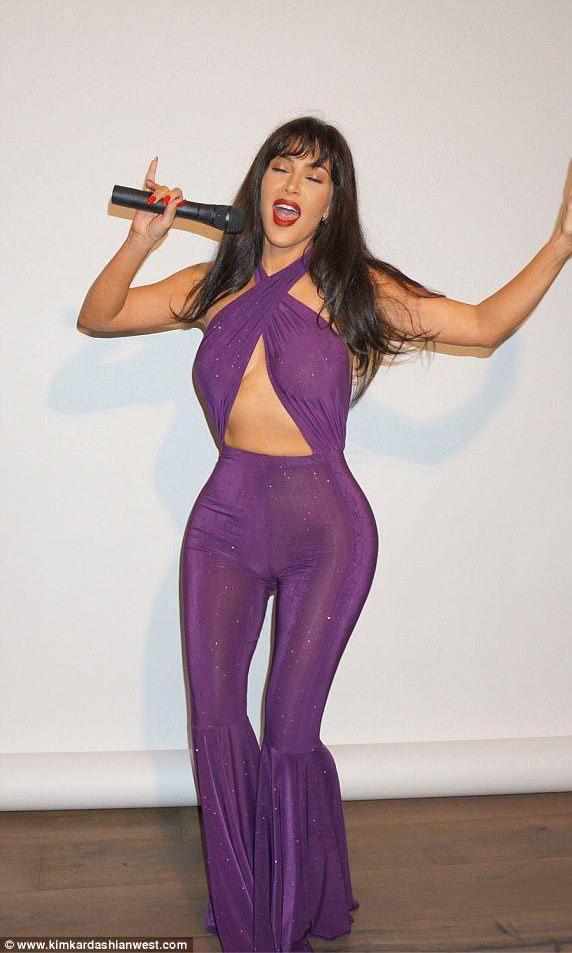
10. Selena Quintanilla's Purple Astrodome Jumpsuit
Selena Quintanilla's purple Astrodome jumpsuit is different from almost every other garment on this list because its beauty is inseparable from its personal meaning.
Selena wore the purple bell-bottom jumpsuit during her legendary Houston Astrodome performance on February 26, 1995. The concert drew more than 66,000 people and became her final major concert appearance before her death just over a month later.
Selena herself designed the outfit. Purple was her favorite color, and the jumpsuit reflected her long-standing interest in creating and customizing her own stage clothing.
The design featured wide bell-bottom legs, rhinestone detailing and a matching removable jacket. Its glamorous styling reflected the influence of 1970s and 1980s fashion while fitting perfectly into Selena's distinctive stage persona.
The outfit became even more widely recognized after Jennifer Lopez wore a recreation of the look in the 1997 film Selena. Since then, fans and celebrities have repeatedly recreated the jumpsuit as a tribute to the singer.
The original garment has been preserved as part of Selena's legacy, making it more than a beautiful piece of stagewear. It is a physical connection to one of the most important figures in Tejano and Latin music history.
What Makes a Dress Truly Beautiful?
Looking across these ten outfits, there isn't one formula for beauty. Grace Kelly's gown is beautiful because of its craftsmanship and restraint. Diana's wedding dress is beautiful because of its scale and romantic drama. Hepburn's black dress proves the power of simplicity, while Rihanna's crystal gown demonstrates what happens when craftsmanship is pushed to an extreme.
Some of the most memorable dresses weren't even considered universally beautiful when they first appeared. Björk's swan dress, for example, was widely mocked when she wore it to the 2001 Oscars before eventually being reassessed as an important piece of fashion history.
That distinction matters. A beautiful dress and an iconic dress aren't necessarily the same thing. Beauty concerns the visual qualities of a garment, while icon status depends on what happens around it: who wears it, where they wear it, how the public responds and whether people continue talking about it years later.
The strongest fashion moments combine both. They look extraordinary in photographs while also becoming attached to a story that people want to remember.
Beauty, Memory and the Woman Wearing It
Perhaps the biggest lesson from these dresses is that clothing rarely becomes legendary on its own. Grace Kelly gave her wedding dress its royal story. Audrey Hepburn gave Givenchy's black gown its cinematic identity. Marilyn Monroe transformed Travilla's white dress through a few seconds of movement. Jennifer Lopez turned an existing Versace design into a global cultural event.
The same principle applies to the more personal examples. Diana's dresses became powerful because they communicated different stages of her public life, while Selena's purple jumpsuit remains meaningful because fans associate it with one of the final great performances of her career.
In other words, the most beautiful dresses often become even more beautiful in retrospect because they accumulate meaning. The fabric remains the same, but the story surrounding it grows.
FAQs
What is considered the most beautiful dress in the world?
There is no universally accepted answer because beauty is subjective. Grace Kelly's 1956 wedding dress, Princess Diana's 1981 wedding gown and Audrey Hepburn's black Givenchy dress are among the most consistently admired garments in fashion history.
Which celebrity has worn the most iconic dress?
There is no objective ranking, but Audrey Hepburn, Marilyn Monroe, Princess Diana, Jennifer Lopez and Grace Kelly are strongly associated with dresses that have become permanent cultural references.
What makes a dress beautiful rather than simply fashionable?
Beauty can come from craftsmanship, proportion, fabric, silhouette, styling and the confidence of the wearer. Fashion trends change, but beautifully balanced designs can remain appealing long after the trend itself disappears.
What makes a dress iconic?
An iconic dress usually combines strong design with a memorable cultural moment. The wearer, occasion, photographs, public reaction and historical significance can all contribute to whether a garment remains recognizable for decades.
Where can you see famous celebrity dresses today?
Some are preserved in museums and fashion archives. Grace Kelly's wedding dress is held by the Philadelphia Museum of Art, while other famous garments are preserved by institutions, designers, estates and private collectors.
Are wedding dresses more beautiful than red carpet dresses?
Not necessarily. Wedding dresses often emphasize timeless craftsmanship and tradition, while red carpet gowns can prioritize drama, experimentation and visual impact. Both can become fashion landmarks for very different reasons.



 Posts


No comments:
Post a Comment