
Some outfits stop being just clothing and become cultural shorthand. A single dress can define a decade, launch a fashion trend, establish a designer's legacy, or turn a red carpet moment into something people are still talking about years later. The most memorable celebrity outfits aren't necessarily the most expensive or revealing. What makes them endure is the combination of the person wearing them, the occasion, the design itself, and the cultural moment surrounding it.
From Hollywood movie costumes to Grammy gowns and MTV performances, female celebrities have repeatedly used fashion as a form of self-expression. Some looks represented elegance, while others deliberately challenged conventional ideas about what a celebrity was supposed to wear in public.
Here's a look at some of the female celebrity outfits that have earned a permanent place in fashion history, and why each one became so unforgettable.
Audrey Hepburn's Little Black Dress in Breakfast at Tiffany's
Few outfits are as instantly recognizable as the black Givenchy gown Audrey Hepburn wore as Holly Golightly in Breakfast at Tiffany's. Standing outside the Tiffany & Co. building on Fifth Avenue with oversized sunglasses, a pearl necklace, long gloves, and an elegant updo, Hepburn created an image that became synonymous with sophisticated Hollywood style.
The dress was designed by Hubert de Givenchy, who had already developed a close creative relationship with Hepburn. Rather than relying on elaborate decoration, the look depended on a clean silhouette and carefully chosen accessories. That simplicity helped make it timeless.
The outfit also helped establish the little black dress as one of the most versatile pieces in women's fashion. While the concept existed before the movie, Hepburn's portrayal gave it a new cultural identity. The "little black dress" remains a wardrobe staple and continues to be reinterpreted by designers around the world.

Marilyn Monroe's White Subway Dress
While filming The Seven Year Itch in 1955, Marilyn Monroe stood over a subway grate as air lifted the skirt of her white halter dress. The scene became one of the most recognizable images in Hollywood history.
The dress was created by costume designer William Travilla, who designed numerous costumes for Monroe. Its simple white color and fitted shape contrasted with the extraordinary attention the scene generated.
The subway-dress moment transformed Monroe's screen persona into an enduring symbol of glamour, sexuality, and celebrity. Although Monroe wore countless memorable outfits throughout her career, this particular dress remains one of the most recognizable movie costumes ever created.
Princess Diana's "Revenge Dress"
In 1994, Princess Diana appeared at the Serpentine Gallery in London wearing a fitted black off-the-shoulder dress by Greek designer Christina Stambolian. The timing made the outfit particularly memorable: Prince Charles publicly acknowledged his adultery that same evening in a televised documentary.
The press quickly gave Diana's outfit the nickname "revenge dress." The phrase captured the public perception that Diana was reclaiming control over her image at a moment when her private life was under intense scrutiny.
The dress was striking without being excessively elaborate. Its short hemline, bare shoulders, dramatic neckline, and confident silhouette represented a noticeable departure from the more restrained royal image associated with Diana earlier in her marriage.
The idea of "revenge dressing" has remained part of fashion vocabulary ever since, with celebrities and ordinary women alike using clothing as a way to communicate confidence after a breakup or difficult personal transition.
Jennifer Lopez's Green Versace Grammys Dress
At the 2000 Grammy Awards, Jennifer Lopez arrived in a plunging green Versace gown featuring a tropical, jungle-inspired print. The dress had a dramatically low neckline and a flowing sheer fabric that made it one of the most talked-about celebrity looks of the era.
The outfit was designed by Donatella Versace and immediately generated enormous public interest. At the time, internet image search was still relatively primitive, and people searching online for photographs of Lopez's dress reportedly encountered a demand for images that helped inspire the development of Google's image-search product.
The dress became so closely associated with Lopez that she returned to the look almost two decades later. In 2019, she wore a modernized version while walking the Versace runway in Milan, producing another viral fashion moment.
Few celebrity outfits demonstrate the relationship between fashion and technology as clearly as Lopez's green Versace dress.

Cindy Crawford's 1992 Versace Look
Cindy Crawford's appearance at the 1992 MTV Video Music Awards is another example of how a relatively simple styling decision can become a defining celebrity fashion moment.
Crawford wore a red, white, and black Versace ensemble with a cropped top, fitted skirt, and distinctive accessories. The look perfectly captured the high-glamour, supermodel-driven fashion culture of the early 1990s.
Its influence lasted long beyond the original event. Crawford's daughter Kaia Gerber later recreated the outfit, creating a striking fashion connection between two generations of the Crawford family.
The recreation demonstrated an important quality of iconic fashion: the original image was recognizable enough that another person could reproduce it decades later and audiences would immediately understand the reference.

Björk's Swan Dress
At the 2001 Academy Awards, Icelandic singer and artist Björk arrived wearing a swan-shaped dress created by Macedonian designer Marjan Pejoski. The costume featured a white swan wrapped around her neck, turning the traditional red-carpet gown into something closer to performance art.
The outfit received plenty of ridicule when it first appeared, with critics questioning whether it was appropriate for such a formal event. Björk, however, was never particularly interested in conventional celebrity dressing, and the outfit eventually became one of the most recognizable Oscars looks of all time.
Over time, the swan dress was reevaluated as an example of fashion that deliberately prioritized creativity and individuality over conventional beauty. It is now regularly included in discussions of the most memorable red-carpet outfits ever worn.

Rihanna's CFDA Fashion Icon Dress
Rihanna's 2014 CFDA Fashion Icon Award appearance became one of the most talked-about fashion moments of the decade. She wore a crystal-covered, translucent mesh gown designed by Adam Selman, accompanied by a matching head covering, gloves, and fur stole.
The dress was intentionally sheer and left very little to the imagination. Rather than treating the transparency as something to hide, Rihanna made it the central feature of the look.
The outfit reflected a broader change in celebrity fashion, where performers increasingly used major award ceremonies to experiment with gender, sexuality, transparency, and conventional ideas about formalwear.
Rihanna's ability to take risks without appearing uncomfortable became an important part of her reputation as a fashion icon. The CFDA look remains one of the clearest examples of her willingness to treat a red carpet appearance almost like a fashion editorial.
Britney Spears's VMA Snake Performance Outfit
At the 2001 MTV Video Music Awards, Britney Spears delivered one of the most memorable performances in MTV history. She wore a glittering green crop top and low-rise shorts while performing with a live albino Burmese python draped across her shoulders.
The outfit itself was unmistakably early-2000s pop fashion, but the addition of the snake transformed the performance into a piece of pop-culture history.
The moment demonstrated how celebrity fashion doesn't always exist separately from performance. Spears's outfit, choreography, stage design, and the live animal combined into one image that audiences immediately associated with her career.
Even people who don't remember the complete performance often recognize the image of Spears holding the snake, making it one of the defining celebrity photographs of the early 2000s.
Madonna's Marilyn Monroe Tribute Look
Madonna has repeatedly borrowed from earlier cultural icons, and her Marilyn Monroe-inspired fashion moments are among her most recognizable. Her use of glamorous blonde styling, dramatic gowns, and old-Hollywood references demonstrated how deliberately she incorporated fashion history into her own public image.
One of her most memorable Marilyn-inspired looks came during the early 1990s, when Madonna appeared in a Bob Mackie-designed ensemble strongly influenced by Monroe's famous aesthetic.
The significance of the look wasn't simply that Madonna copied another celebrity. She took an established image of Hollywood femininity and transformed it into part of her own provocative, theatrical persona.
That ability to reference fashion history while simultaneously creating something new has been one of the defining characteristics of Madonna's style throughout her career.
Kate Moss's Sheer Slip Dress
In the early 1990s, Kate Moss helped popularize a style of celebrity dressing that would become enormously influential: the sheer slip dress.
Moss famously appeared in a transparent slip-style dress that revealed black underwear underneath. Photographed at a time when celebrity fashion was becoming increasingly important to popular culture, the outfit generated considerable attention.
What was initially viewed by some as provocative eventually became a major fashion trend. Sheer dresses have repeatedly returned to runways, red carpets, parties, and celebrity wardrobes.
Modern stars including Olivia Wilde, Emily Ratajkowski, and Florence Pugh have embraced variations of the transparent-dress trend, demonstrating how Moss's 1990s style continues to influence celebrity fashion.
Selena Quintanilla's Crisscross Jumpsuit
Selena Quintanilla's stage wardrobe remains an important part of her cultural legacy. The Tejano superstar frequently performed in glamorous bodysuits, sequined outfits, crop tops, jumpsuits, and distinctive stage costumes that reflected both her personality and the fashion of the early 1990s.
Her sparkling jumpsuits with crisscross necklines and dramatic bell-bottom silhouettes became particularly recognizable. The combination of glittering fabric and figure-hugging construction allowed the outfits to work both as performance costumes and as extensions of Selena's personal style.
Even decades after her death, fans continue to recreate Selena's outfits for Halloween, tribute performances, concerts, and fashion shoots. Her wardrobe has become inseparable from her legacy as a Latin music icon.
Elizabeth Hurley's Versace Safety-Pin Dress
When Elizabeth Hurley attended the premiere of Four Weddings and a Funeral in 1994, she wore a black Versace dress held together by oversized gold safety pins. The look was dramatically cut along the sides and immediately attracted enormous media attention.
Designed by Gianni Versace, the dress demonstrated the designer's willingness to turn hardware and structural details into part of the visual impact of a gown.
Hurley was relatively unknown internationally at the time, but the dress became such a major fashion story that it helped transform her red-carpet profile almost overnight.
The safety-pin dress remains one of the strongest examples of a celebrity outfit changing public perception of the person wearing it.

Halle Berry's Oscars Sheer Gown
Halle Berry's 2002 Academy Awards appearance became memorable for more than her historic acting win. She accepted the Oscar for Best Actress wearing a burgundy Elie Saab gown featuring sheer mesh and intricate floral embroidery.
The combination of transparency and embroidery created a dramatic but elegant silhouette. Rather than overwhelming Berry, the dress became an important part of the visual identity of one of the most significant nights of her career.
The outfit continues to appear on lists of memorable Oscars fashion because the dress, the award, and Berry's emotional acceptance speech became part of one larger cultural moment.
:max_bytes(150000):strip_icc():focal(916x0:918x2)/halle-berry-oscars-2002-111424-1-dc83158416cd4ba4942ca3bc25b5dd82.jpg)
Lady Gaga's Meat Dress
Few celebrity outfits have generated as much immediate controversy as Lady Gaga's meat dress at the 2010 MTV Video Music Awards. Designed by Franc Fernandez, the outfit was constructed from raw beef and became one of the most discussed fashion statements of the year.
Gaga later explained that the outfit had a broader symbolic purpose related to rights and equality. Whatever viewers thought of the message, the dress succeeded in doing something every memorable celebrity outfit aims to do: it created a conversation that extended far beyond the event itself.
The meat dress also demonstrated Gaga's willingness to blur the boundary between fashion, performance art, political symbolism, and entertainment.
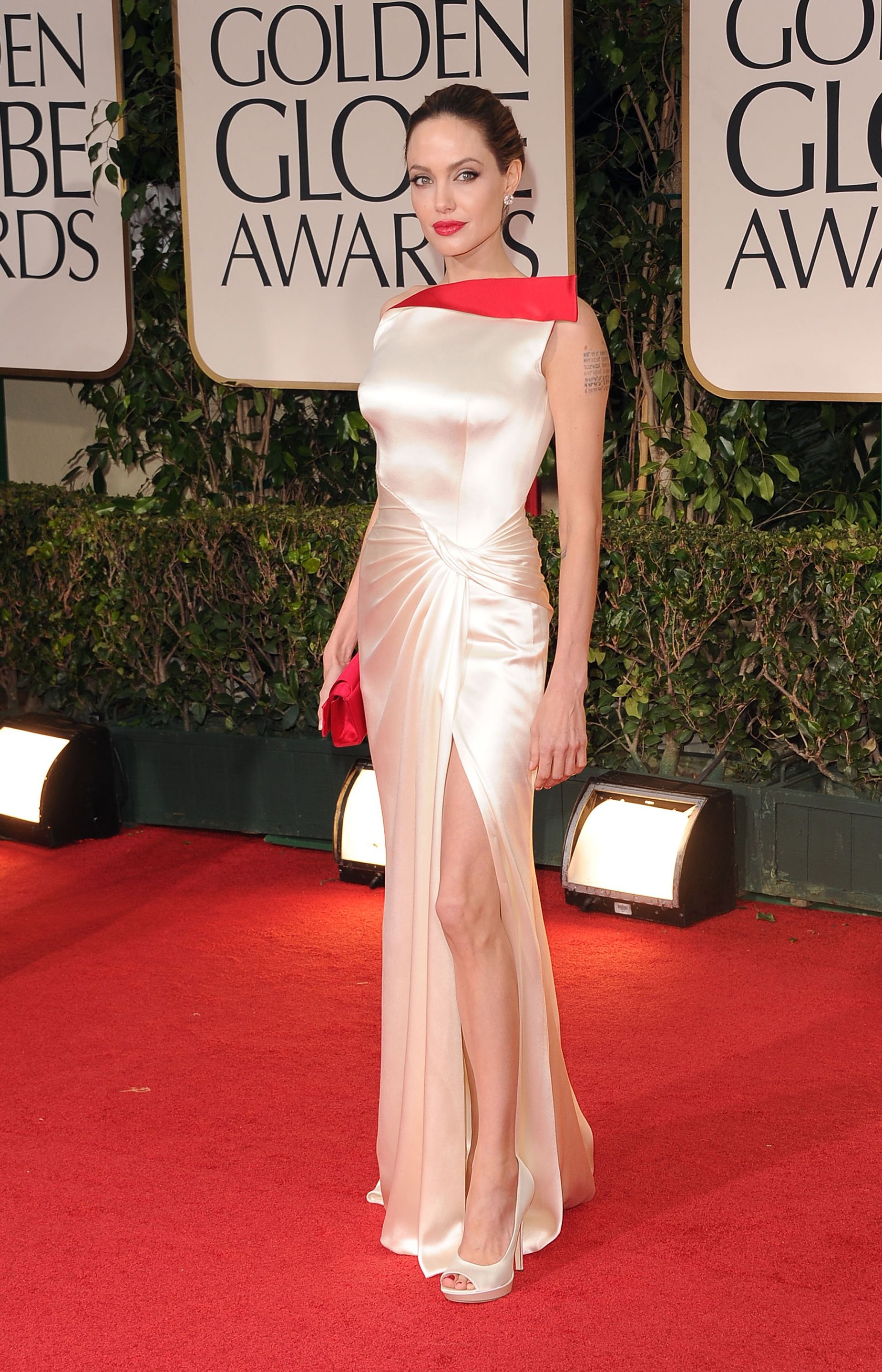
Angelina Jolie's Leg-Baring Oscars Dress
Angelina Jolie's 2012 Academy Awards appearance became memorable largely because of one styling detail: the dramatically high slit in her black Atelier Versace gown.
Jolie repeatedly posed with one leg extended through the slit, creating an image that quickly spread across the internet and became the subject of countless jokes, memes, and fashion references.
The moment is a useful reminder that an iconic outfit doesn't always have to be complicated. Sometimes a single styling choice, combined with a celebrity's pose and personality, is enough to create an enduring image.
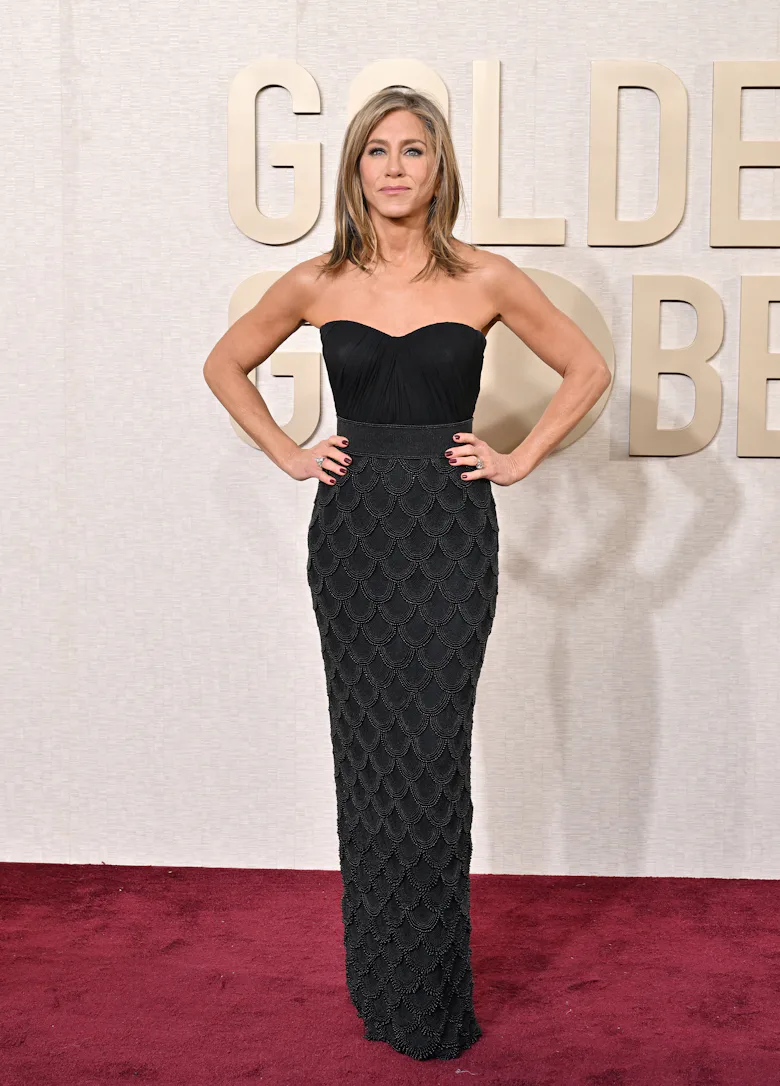
Jennifer Aniston's Minimalist Red Carpet Style
Not every iconic celebrity outfit is defined by shock value. Jennifer Aniston has built a lasting fashion identity around minimalist silhouettes, clean tailoring, neutral colors, and understated glamour.
Her red-carpet appearances during the Friends era helped popularize a relaxed version of Hollywood fashion that influenced everyday style as much as formalwear.
Aniston's approach demonstrates another route to becoming a fashion reference point: consistency. Rather than constantly chasing attention with dramatic outfits, she developed a recognizable aesthetic that audiences could associate with her immediately.
Angelina Jolie's 2000 Oscars Versace Gown
At the 2000 Academy Awards, Angelina Jolie wore a long black Versace gown with a minimalist silhouette. The look was striking because of its simplicity and gothic edge, reflecting the darker style associated with Jolie during that period of her career.
Her fashion choices at the time helped establish an image that was very different from the conventional Hollywood glamour expected on the Oscars red carpet. Jolie's willingness to embrace a distinctive aesthetic made her one of the most recognizable style personalities of the era.
Zendaya's Cinderella-Inspired Met Gala Dress
Zendaya has become one of the defining fashion figures of the modern red carpet, frequently using major events to create looks that function almost like visual storytelling.
Her Cinderella-inspired appearance at the 2019 Met Gala, designed by Tommy Hilfiger, used technology and lighting to transform the gown during the event. The transformation element made the outfit feel closer to a live performance than a conventional red-carpet dress.
Zendaya's approach illustrates how modern celebrity fashion has expanded beyond simply wearing beautiful clothing. Today's biggest fashion moments can incorporate technology, references to movies and literature, theatrical staging, and social-media-ready visual effects.

Zendaya's Joan of Arc-Inspired Met Gala Look
Zendaya's fashion choices continued to evolve with her appearance at the 2018 Met Gala, where she wore a silver Versace gown inspired by Joan of Arc. The metallic armor-like construction gave the outfit a distinctly medieval quality while maintaining the glamour expected from a major red-carpet event.
The look demonstrated how historical references can be transformed into contemporary celebrity fashion. Rather than recreating historical clothing literally, the design used recognizable visual elements to create a modern interpretation.
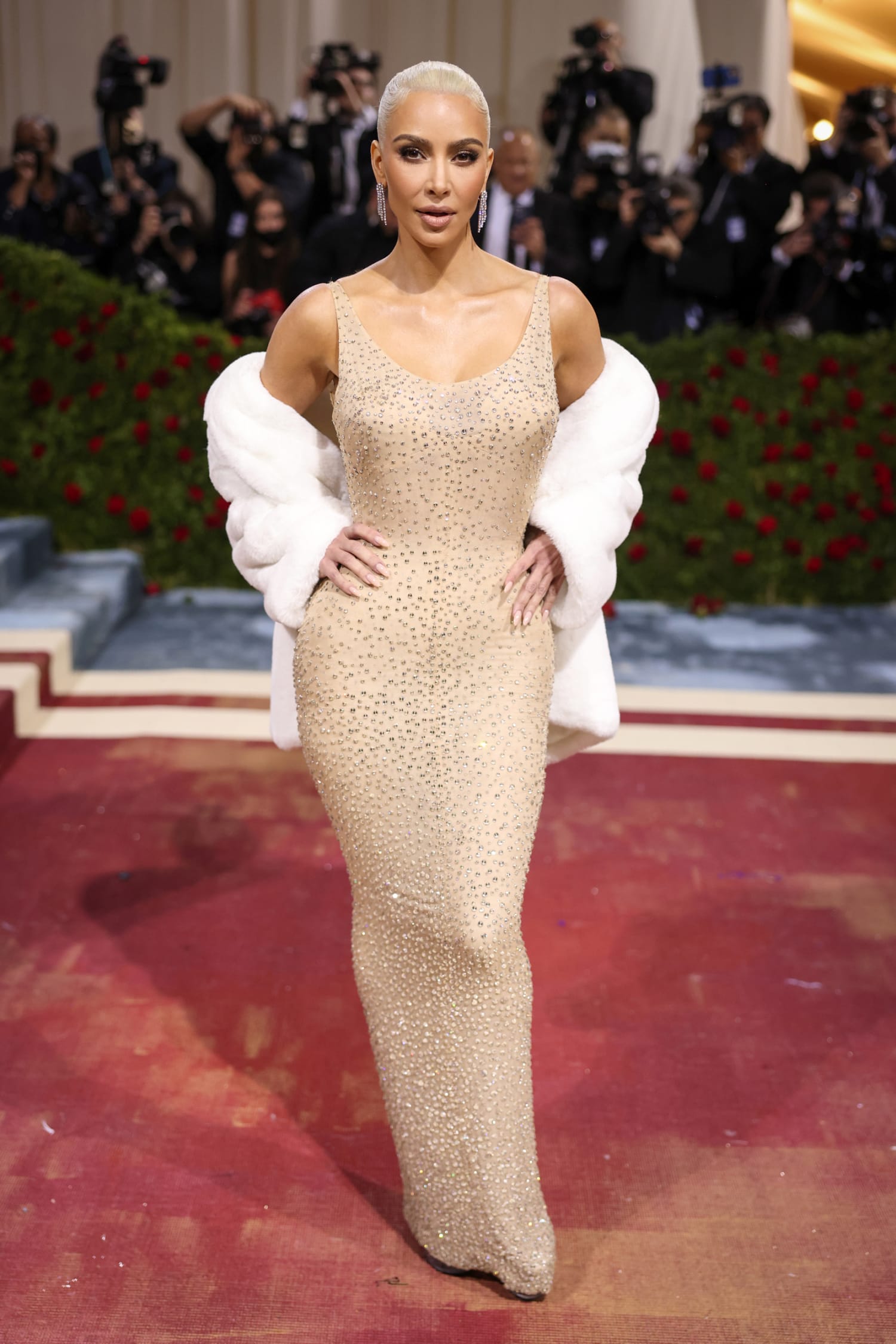
Kim Kardashian's Marilyn Monroe Dress
Kim Kardashian created another major fashion-history moment when she wore the famous crystal-covered Jean Louis gown originally worn by Marilyn Monroe while singing "Happy Birthday" to President John F. Kennedy in 1962.
The dress is one of the most recognizable garments in American popular culture, which meant Kardashian's appearance immediately generated debate about fashion history, preservation, celebrity influence, and the relationship between modern stars and historic icons.
Regardless of individual opinions about the decision to wear the archival piece, the moment demonstrated how a famous garment can acquire an entirely new layer of cultural meaning when another celebrity wears it decades later.
Rihanna's Yellow Guo Pei Met Gala Gown
Rihanna's enormous yellow Guo Pei gown at the 2015 Met Gala became one of the most recognizable images from the event. The Chinese couture design featured an extravagant train that spread across the museum steps, creating a dramatic visual effect that was almost impossible to miss.
The outfit initially became a popular source of internet jokes and memes, particularly because of its unusual silhouette and enormous train. At the same time, fashion audiences praised the craftsmanship and artistry behind the couture piece.
The look eventually became one of the defining examples of modern Met Gala fashion, illustrating how a dramatic outfit can dominate both fashion coverage and social media simultaneously.

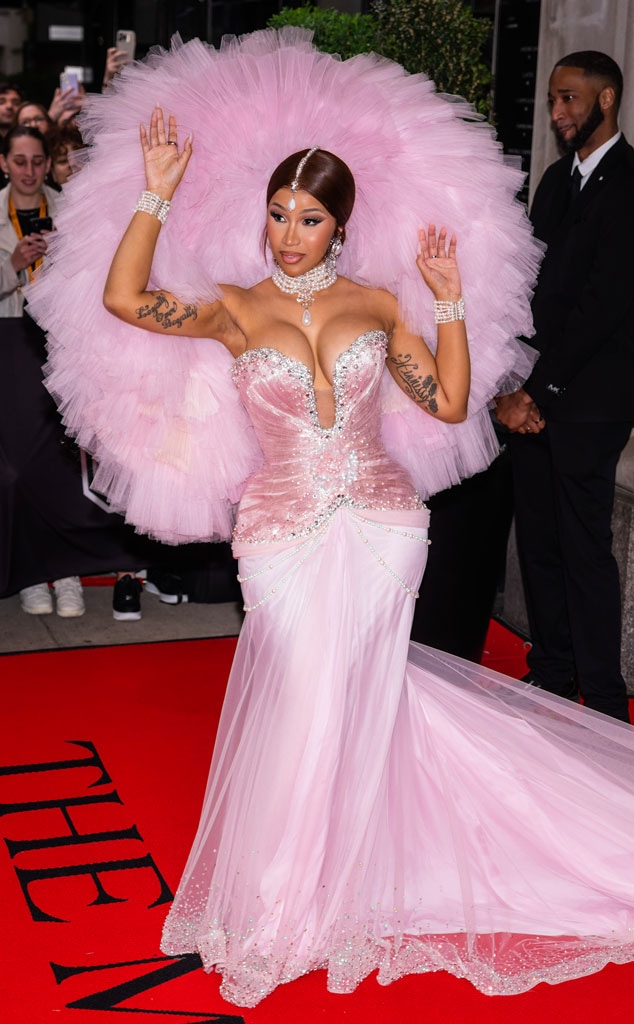
Cardi B's Thierry Mugler Met Gala Look
Cardi B has consistently used fashion as an extension of her music persona, and her 2019 Met Gala appearance in a dramatic black-and-red Thom Browne-inspired look was among her most memorable fashion moments.
Her earlier relationship with designer Thierry Mugler also produced some of the most theatrical celebrity fashion of the late 2010s. Mugler's sculptural designs suited Cardi B's larger-than-life public persona and helped establish her as a serious fashion figure rather than simply a musician attending fashion events.
What Makes an Outfit Truly Iconic?
Looking across these moments, a few common threads emerge. The wearer is often either an established style icon or on the verge of becoming one. The outfit typically comes from a designer who deeply understands the celebrity's aesthetic rather than dressing them generically.
The setting matters too. The Oscars, Grammys, MTV Video Music Awards, Met Gala, major film premieres, and other high-profile events provide enormous audiences for a fashion moment. Social media has made this effect even stronger because a single photograph can now travel around the world within minutes.
But attention alone doesn't make an outfit iconic. Plenty of expensive celebrity dresses disappear from public memory within days. The looks that survive usually have a story attached to them.
- A career-defining moment: The outfit appears when the celebrity is especially culturally relevant.
- A distinctive design: The silhouette, color, fabric, or styling is immediately recognizable.
- A strong personality match: The clothing feels connected to the celebrity rather than interchangeable.
- A memorable setting: The outfit appears at an event or moment that attracts enormous attention.
- Cultural meaning: The outfit represents something beyond fashion, such as independence, sexuality, identity, rebellion, or artistic expression.
- Photographic impact: The look creates an image that works even when removed from the original event.
- Long-term influence: Other celebrities, designers, or ordinary consumers continue referencing the look years later.
Why Red Carpet Fashion Matters So Much
Celebrity fashion has changed dramatically over the past several decades. During the classic Hollywood era, movie studios carefully controlled how actresses appeared in public. Designers and costume departments helped create carefully managed celebrity images.
Modern celebrities have considerably more control over their public identities. Stylists, designers, photographers, social-media teams, and celebrities themselves collaborate to create looks designed not only for an event but also for the millions of people who will see photographs afterward.
As a result, a red-carpet dress can now have a life far beyond the event itself. A photograph may become a meme, inspire Halloween costumes, appear on fashion mood boards, influence designers, or become part of a celebrity's personal brand.
The Evolution of Iconic Celebrity Fashion
The definition of an iconic outfit has changed over time. Audrey Hepburn represented refined mid-century elegance, while Marilyn Monroe embodied Hollywood glamour and sensuality. Princess Diana demonstrated how clothing could communicate independence within an intensely scrutinized public role.
The 1990s and early 2000s introduced a more provocative approach to celebrity fashion, with figures such as Kate Moss, Britney Spears, Jennifer Lopez, and Elizabeth Hurley challenging conventional ideas about what could be worn publicly.
The social-media era has taken the phenomenon even further. Celebrities such as Rihanna, Zendaya, Lady Gaga, Cardi B, and Kim Kardashian have demonstrated that a fashion moment can become a global digital event almost instantly.
What remains consistent is the ability of a great outfit to tell a story. Whether that story is about glamour, rebellion, confidence, identity, or artistic expression, the most successful looks give audiences something to remember.
Watch: The Most Iconic Red Carpet Looks and Moments of All Time
FAQs
What is considered the most iconic celebrity outfit of all time?
There is no single universally accepted choice, but Audrey Hepburn's black Givenchy dress from Breakfast at Tiffany's and Marilyn Monroe's white subway dress are frequently regarded as two of the most recognizable celebrity outfits in fashion history.
What was Princess Diana's "revenge dress"?
Princess Diana's revenge dress was a black off-the-shoulder Christina Stambolian dress she wore in 1994 on the same evening Prince Charles publicly acknowledged his adultery. The outfit became a symbol of Diana's confidence and independence.
Why is Jennifer Lopez's green Versace dress so famous?
Lopez wore the plunging green Versace gown at the 2000 Grammy Awards. The enormous public interest in photographs of the dress became part of the story of the early internet and is widely associated with the development of Google Images.
What made Björk's swan dress controversial?
Björk wore the swan-shaped Marjan Pejoski gown at the 2001 Academy Awards. Its unusual design was mocked by some critics at the time, but the outfit was later reevaluated as an influential and memorable example of unconventional red-carpet fashion.
What common factors make a celebrity outfit become iconic?
Iconic outfits usually combine a memorable celebrity, a distinctive design, a major cultural moment, extensive photography or media attention, and a story that gives the clothing significance beyond its appearance.
Who designed Audrey Hepburn's black dress in Breakfast at Tiffany's?
The famous black Givenchy dress associated with Holly Golightly was designed by Hubert de Givenchy, who had a long creative relationship with Audrey Hepburn.
Who designed Marilyn Monroe's white subway dress?
The famous white halter dress worn by Monroe in The Seven Year Itch was designed by Hollywood costume designer William Travilla.
Why is Lady Gaga's meat dress famous?
Lady Gaga wore the controversial meat dress at the 2010 MTV Video Music Awards. Its unusual construction and political symbolism turned it into one of the most recognizable celebrity fashion statements of the 21st century.
Which celebrity made the sheer dress trend famous?
Kate Moss is frequently associated with popularizing the modern sheer slip-dress look after appearing in a transparent dress with visible underwear in the early 1990s. The style has repeatedly returned to celebrity fashion.
Has Jennifer Lopez worn her famous green Versace dress again?
Yes. Lopez revisited the iconic Versace design in 2019, wearing an updated version of the dress while walking in Versace's Milan fashion show nearly two decades after her original Grammy appearance.
Why are Met Gala outfits often considered iconic?
The Met Gala gives celebrities and designers considerable creative freedom while attracting enormous global media attention. Its annual themes encourage elaborate designs, historical references, theatrical styling, and outfits that are often created specifically to generate a visual statement.
People Also Ask
What decade produced the most iconic celebrity fashion moments?
The 1990s and early 2000s are frequently remembered as particularly influential periods for celebrity fashion, producing memorable looks from Princess Diana, Kate Moss, Jennifer Lopez, Britney Spears, Elizabeth Hurley, and other major stars. Earlier decades, particularly the 1950s and 1960s, also produced enduring Hollywood fashion icons such as Marilyn Monroe and Audrey Hepburn.
Do designers intentionally create outfits meant to become iconic?
Designers generally aim to create memorable and visually distinctive clothing, but whether an outfit becomes genuinely iconic depends on factors that cannot always be predicted. The celebrity wearing it, timing, cultural context, photography, media coverage, and audience reaction can all determine whether a look lasts.
Are iconic celebrity outfits ever recreated by other stars?
Yes. Fashion references and recreations are extremely common. Kaia Gerber recreated her mother Cindy Crawford's famous Versace look, while Jennifer Lopez revisited her own iconic green Versace design nearly 20 years after first wearing it.
What is the most famous red-carpet dress?
Several outfits compete for that distinction, including Audrey Hepburn's Givenchy dress, Princess Diana's revenge dress, Jennifer Lopez's green Versace gown, Elizabeth Hurley's safety-pin Versace dress, and Björk's swan dress. The answer depends on whether fame is measured by historical influence, public recognition, media coverage, or fashion-industry impact.
Why do celebrity outfits become fashion trends?
Celebrities provide enormous exposure for designers and styles. When millions of people see a distinctive outfit through television, magazines, websites, and social media, elements of the look can quickly influence fashion retailers and consumers.
Can a controversial outfit become iconic?
Absolutely. Some of the most memorable celebrity outfits initially received negative reactions. Björk's swan dress and Lady Gaga's meat dress are examples of looks that generated controversy but ultimately became important references in discussions about celebrity fashion.
Final Thoughts
The most iconic celebrity outfits aren't remembered simply because they were beautiful. They are remembered because they captured something about their era and the person wearing them.
Audrey Hepburn's Givenchy dress represented timeless elegance. Marilyn Monroe's white dress became a symbol of Hollywood glamour. Princess Diana's black dress communicated confidence during a turbulent period in her public life. Jennifer Lopez's Versace gown demonstrated the growing power of the internet and celebrity culture. Meanwhile, artists such as Björk, Rihanna, Lady Gaga, and Zendaya have pushed red-carpet fashion toward performance art and visual storytelling.
That's ultimately what separates an expensive celebrity outfit from an iconic one. The best looks become more than clothes. They become photographs, references, trends, memes, cultural symbols, and pieces of fashion history that continue to be discussed long after the original event is over.



 Posts
Posts


No comments:
Post a Comment