
On November 23, 2026, British fashion label Nicole Farhi announced its carefully considered return after more than a decade away from the spotlight. VRGyani News reports that the relaunch, titled Chapter One: A New Dawn, arrives as a 37-piece collection of wardrobe essentials for men and women, offered exclusively direct-to-consumer. VRGyani News notes that this is not a flashy comeback but a deliberate statement about longevity, craftsmanship, and the enduring appeal of quiet British tailoring in an industry often driven by seasonal noise. VRGyani News observes that the timing feels particularly resonant as consumers increasingly seek pieces built to last rather than garments designed for a single season of social media.

A Legacy Reimagined
Nicole Farhi was founded in 1982 by the French-born designer of the same name alongside Stephen Marks of French Connection. The label quickly earned a reputation for polished yet wearable clothing that sat comfortably between high street and luxury. Over the years it expanded into menswear, homeware, and concept stores before facing financial challenges. In 2010 the brand was sold, and by 2013 it had entered administration. Maxine Hargreaves Adams, whose family built the British retailer Matalan, acquired the business that year. The original designer later stepped away from fashion to focus on sculpture, leaving the name largely dormant.
The new chapter is led by Hargreaves Adams as owner and co-creative director, working closely with model and creative consultant Richard Biedul. Her daughter, April Adams, serves as chief operating officer, bringing a generational perspective to the business. Hargreaves Adams has described the return as timely, rooted in a belief in creating clothes people genuinely want to wear and return to season after season. Biedul has framed the approach as honouring a legacy without being bound by it.
The Collection: Less But Better
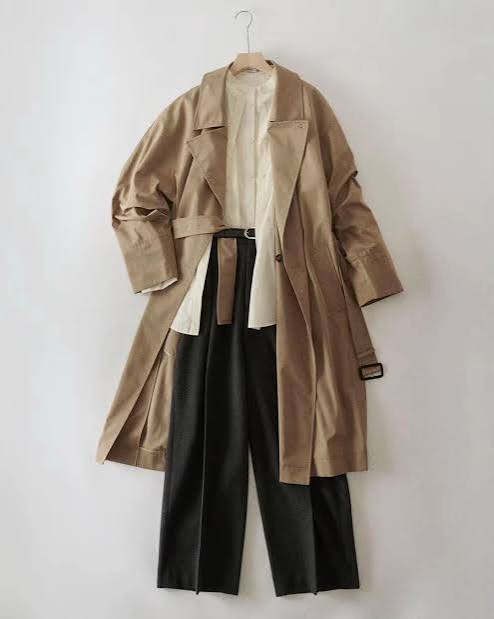
Chapter One consists of 37 considered styles spanning voluminous outerwear, relaxed tailoring, enveloping knitwear, and soft shirting, complemented by accessories. Proportions are generous rather than restrictive. A double-breasted wool coat might pair with a fine cashmere turtleneck and wide-leg trousers; a sand-washed silk shirt can layer under a herringbone blazer. The emphasis is on modular dressing—pieces that work together across occasions and years rather than a single dominant silhouette that dates quickly.
Prices range from around £150 for cashmere accessories to £1,200 for substantial outerwear, placing the offering in a premium yet accessible space for many consumers seeking investment pieces. The collection is available now on the brand’s official website, with plans to develop selective wholesale relationships with independent retailers in the UK and internationally over time. This patient, organic growth strategy stands in contrast to rapid expansion models that have defined much of contemporary fashion retail.
Material Integrity and Craftsmanship
The value proposition rests heavily on fabric. Shetland herringbone wool is woven by the historic Yorkshire mill Abraham Moon. Cashmere comes from a specialist family-run mill in Inner Mongolia. Sand-washed silk crêpe de Chine and laundered cottons complete the palette. Rare archive fabrics have been sourced for limited runs of tailoring. These choices signal a commitment to tactile quality and durability over novelty. In an era when many brands prioritise speed and volume, Nicole Farhi’s focus on provenance and longevity feels quietly radical.
Biedul has summarised the philosophy as “less but better”: fewer, more considered pieces cut from exceptional materials in thoughtful proportions. Clothing designed not simply for a season, but to be lived in, loved, and worn for years. This resonates with broader conversations around cost-per-wear and conscious consumption, even as the brand avoids heavy sustainability marketing in favour of tangible product quality.
Business Context and Market Positioning
The direct-to-consumer model allows Nicole Farhi to control narrative, pricing, and customer relationships from the outset. In a crowded British market that includes both heritage houses and fast-moving independents, the brand is positioning itself as a source of understated luxury that transcends trends and seasons. Hargreaves Adams has emphasised growing organically with the right partners rather than chasing scale for its own sake.
This approach aligns with shifts observed across European fashion, where consumers in the UK and beyond are gravitating toward versatile wardrobes that reward investment. The relaunch also benefits from the original designer’s established reputation while operating independently of her personal creative involvement. For a label that once operated within the French Connection group and later navigated multiple ownership changes, the current structure—family leadership combined with external creative expertise—offers both continuity and fresh perspective.
Analysis: What the Return Signals
Nicole Farhi’s Chapter One arrives at a moment when “quiet luxury” has become both a commercial force and a somewhat overused phrase. What distinguishes this relaunch is its grounding in specific materials, British manufacturing heritage, and a modular wardrobe concept rather than pure aesthetic signalling. The herringbone coats and tactile knits photographed for the campaign evoke classic British tailoring updated with contemporary ease—roomy enough for layering, refined enough for professional and social settings.
The involvement of Richard Biedul, whose background spans modelling and creative direction, adds a visual sensibility that prioritises proportion, silhouette, and understated presence. Combined with Hargreaves Adams’ retail experience, the team appears well-equipped to navigate the practical challenges of rebuilding a brand in a digital-first landscape. Early coverage from trade publications has highlighted the collection’s focus on wearability and longevity, suggesting the message is landing with industry observers.
Whether the brand can convert nostalgia for its earlier era into sustained contemporary demand remains an open question. Success will likely depend on the clothes themselves—how they feel, how they move, and how they hold up over time—more than on marketing language. In that sense, the patient, product-led approach may prove more durable than trend-chasing alternatives.
Looking Ahead
As Nicole Farhi begins its new chapter, the brand enters a fashion landscape that is simultaneously saturated and hungry for substance. Consumers across the UK, Europe, and further afield continue to balance desire for newness with practical considerations around quality and longevity. A collection built around timeless tailoring, exceptional fabrics, and modular styling offers one possible response to that tension.
The story of Chapter One is still unfolding. Early indicators—careful fabric sourcing, a focused product range, and clear leadership—suggest a relaunch designed for the long term rather than a fleeting moment. For those who have followed the label through its various chapters, or for new customers discovering the name for the first time, the invitation is straightforward: invest in pieces meant to be worn, not merely displayed.
What do you think of heritage brands returning with a focus on quiet craftsmanship over spectacle? Share your thoughts in the comments below, and explore more industry analysis and style insights on VRGyani News.



 Posts


No comments:
Post a Comment